AI LANGUAGE LEARNING PLATFORM
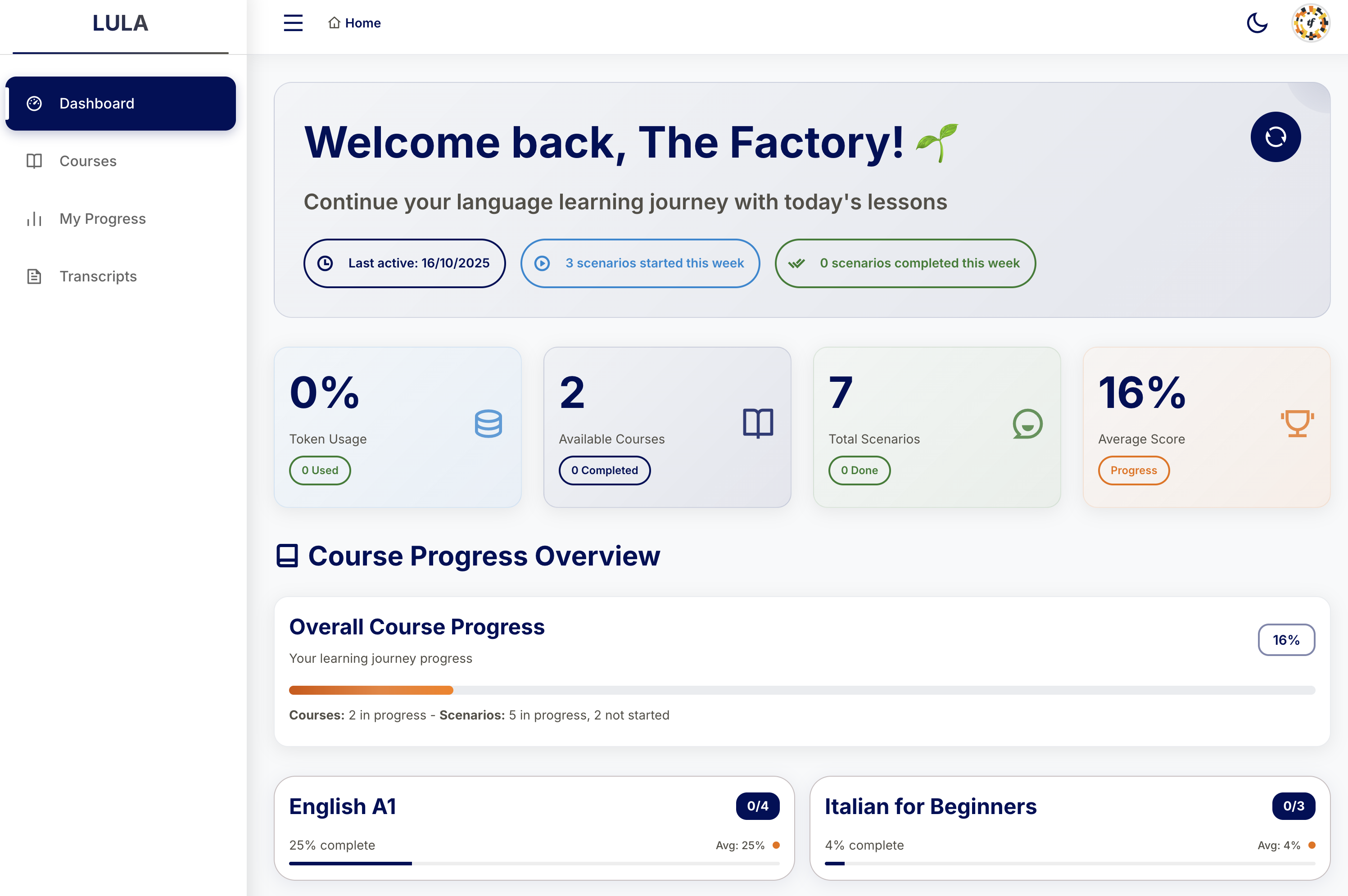
AI language-learning platform
A speech-to-speech language-learning platform. Teachers author scenarios aligned to CEFR levels; students practise conversations with virtual language buddies built on Azure OpenAI realtime models. The runtime is containerised on Azure.
Engineering work centred on speech latency under classroom concurrency, tenant-safe storage of lesson content, and operational visibility so faculty support could trace failures without opening tickets into opaque SaaS consoles.
Real-time speech-to-speech
Students hold voice conversations with virtual language buddies powered by Azure OpenAI realtime models: speech in, speech out, low latency.
Teacher-authored scenarios
Teachers build courses and scenarios that fit their curriculum. The platform helps draft prompts and flows, while keeping the content aligned to CEFR levels.
Gamified learning
Levels, achievements and immediate feedback give students a reason to keep practising.
Customisation options
Multiple voices and avatar styles for the language buddies. Token management keeps resource use predictable without dropping conversation quality.
Conversation transcripts
Every conversation is transcribed, so teachers can review interactions, track progress, and spot areas for improvement.
01The challenge
Students need authentic conversation practice that does not stop at the classroom door. The customer wanted a platform that supports real-time speech practice aligned with CEFR, with teachers in control of the curriculum and scenarios. Available tools were either too generic, too rigid, or did not engage students enough to keep them practising.
02Our implementation
We delivered a language-learning platform where teachers create scenarios and courses, and students hold real-time speech-to-speech conversations with virtual language buddies, scoped to a CEFR proficiency level.
The platform runs in containers on Azure and uses Azure OpenAI realtime models for natural conversation. Transcripts and prompt drafts help teachers iterate on content. Voices, avatars, gamified challenges and token management are first-class features. Endpoints are exposed through Azure security services, with data protection and predictable performance built in.
03Educational impact
Students get conversation practice on demand. They can speak at their own pace, get immediate feedback, and build confidence without the pressure of a classroom audience.
Teachers get authoring tools that fit their curriculum and CEFR levels. Transcripts give insight into progress; the gamified loop keeps students engaged. The architecture scales from a single classroom to a large institution.
Key capabilities
CEFR-aligned learning
Scenarios and content are structured to CEFR proficiency levels for the right challenge and progression.
Natural conversations
Azure OpenAI realtime models drive natural-sounding dialogue with the virtual language buddies.
Secure and scalable
Azure security services protect student data; the container runtime keeps performance predictable as usage grows.
Technologies and frameworks
A containerised platform on Azure, using Azure OpenAI realtime models for speech-to-speech conversation. Endpoints are exposed through Azure security services, with data protection and predictable performance for the institutions running it.